If you want to transform Airtable records into beautifully designed invoices, business cards, catalogs, or real estate sheets without leaving Airtable, the Airtable Page Designer extension is the perfect tool. It simplifies and speeds up the design process, letting you turn raw data into polished, print-ready pages effortlessly.
In this article, we’ll explore what the Airtable Page Designer is, how to set it up, its limitations, and some alternative options if you need more automation.
What Is the Airtable Page Designer Extension?
The Airtable Page Designer extension allows you to build custom layouts directly using your Airtable data. Once configured, you can create PDFs or print pages tailored to your needs. It’s ideal for designing:
- Invoices
- Business cards
- Catalogs
- Casting sheets
- Real estate property sheets
- Almost any document based on Airtable records
You won’t need to export your data into other software. The Page Designer pulls your fields directly from Airtable and lets you arrange them visually on the page.
How to Set it Up
Setting up the Airtable Page Designer is straightforward:
- Add the extension: When added, the settings panel opens automatically.
- Select your source table: Choose the Airtable table with the records you want to design pages for.
- Pick your page size: Default is US Letter (8.5 x 11 inches). You can also select presets like A4 or business cards, or define custom dimensions.
- Choose orientation: Portrait or landscape layout.
- Design your page: Drag and drop fields, images, and text blocks into your desired layout.
Once ready, click Print at the top right. In the print dialog, select Save as PDF or your printer. Just like that, you get a professional document, ready to share or print.
Limitations of Airtable Page Designer
Although powerful, Airtable Page Designer has some limits to consider:
- Requires a paid Airtable plan since extensions aren’t available on free accounts.
- Does not support automed nor bulk PDF generation: PDFs must be created manually (couple of clicks) one record at a time.
- Only users with access to the table data can use it; interface-only users can’t access this extension.
If you need automated batch PDF creation or interface-only user compatibility, this extension might not fully meet your requirements.
Alternatives to Airtable Page Designer for Automated PDF Generation
For those seeking more automation beyond Airtable Page Designer’s manual approach, consider these tools:
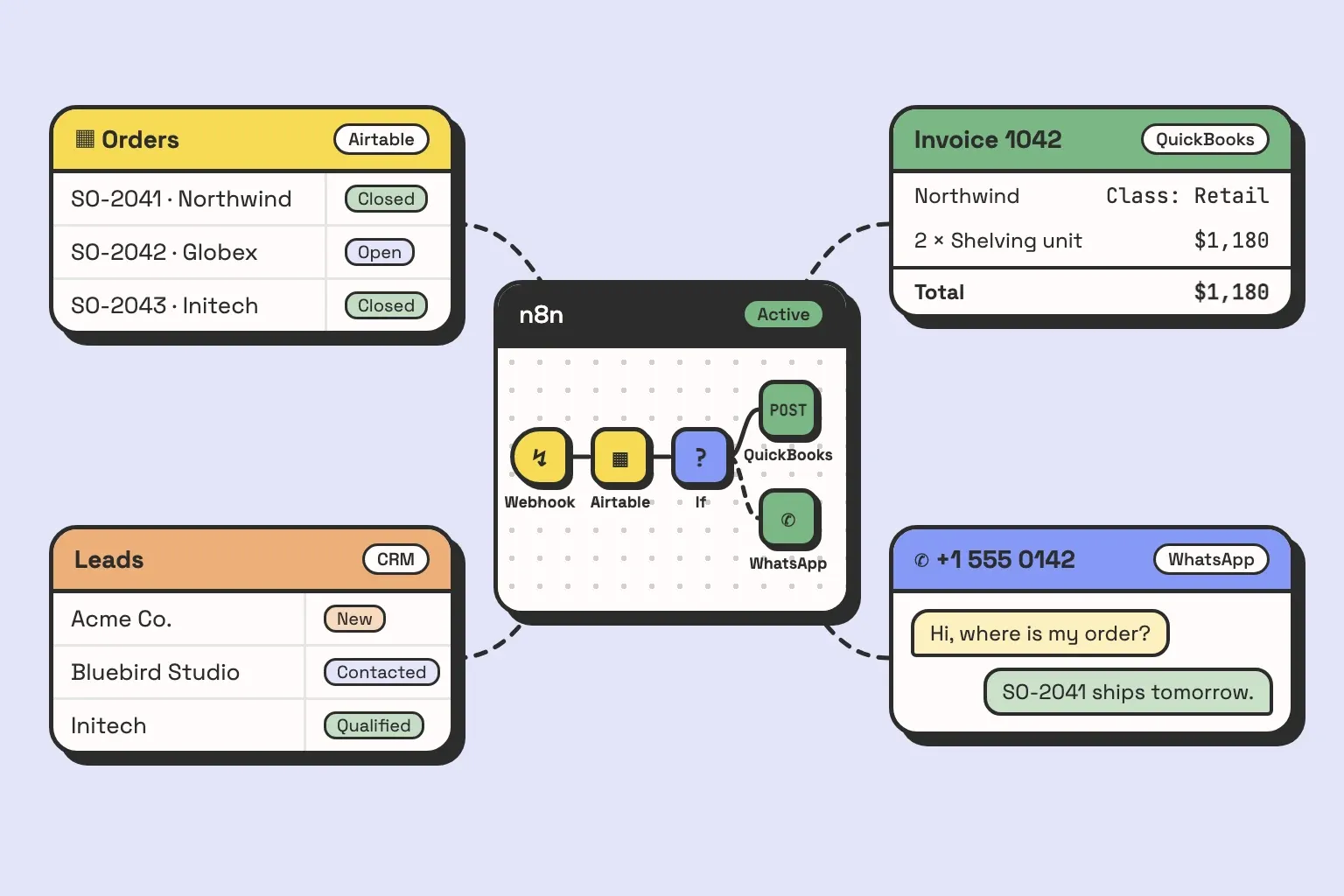
- n8n Custom Workflows: An open-source automation platform where you can create workflows to automatically pull Airtable data and generate PDFs at scale.
- Fillout Forms PDF Integration: Combines form building with PDF generation and integrates with Airtable to automate document creation from form responses.
For an in-depth comparison, check Fillout Forms vs Airtable Forms.
Why Choose Airtable Page Designer for Your Custom Pages?
Many small businesses and teams appreciate Airtable Page Designer for quick and attractive document creation, all within Airtable. It eliminates the need to juggle multiple tools and offers flexible design options without the complexity of full design software.
Additionally, you can complement it with Airtable automations—for instance, triggering notifications after a record update to remind you to generate an invoice manually.
Learn more about these workflow enhancements in Airtable Automations: Boost Your Workflow Productivity.
Final Thoughts
The Airtable Page Designer extension offers a user-friendly way to turn your Airtable records into stunning, print-ready pages. Keep in mind the requirement for a paid plan and the limitation to manual, single-record PDF exports.
If your business grows or requires advanced automation, tools like n8n or Fillout can extend your capabilities well beyond what Page Designer offers.
Want to choose the best Airtable plan for your needs? Visit Airtable Pricing: Compare Plans and Choose the Best One.
Ready to start designing beautiful pages with Airtable Page Designer? Get a call with an Airtable expert!
For more tips on streamlining your Airtable workflows, explore: